Which Steam headset fits your setup?
Choose Steam Frame if you want a wireless, battery-powered headset with inside-out tracking, local play, and wireless PC streaming. Consider Valve Index if its more accurate controller finger tracking outweighs using discontinued, cabled hardware with external trackers.
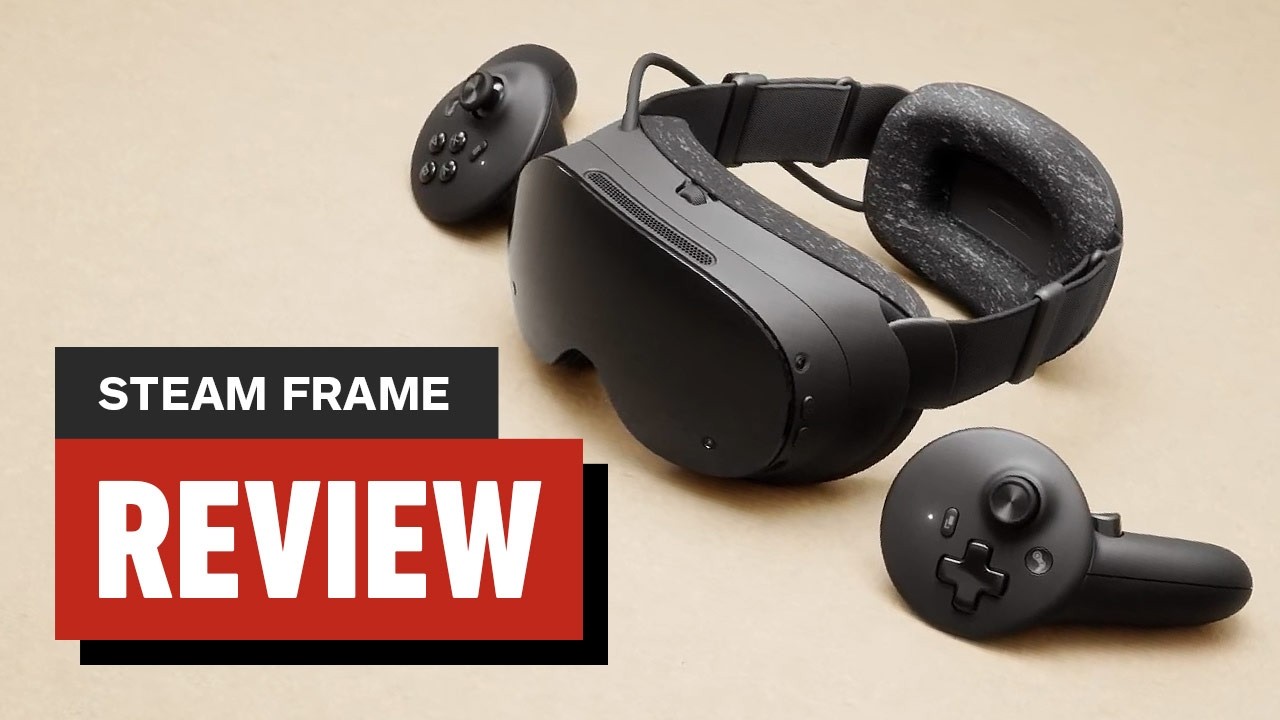
Steam Frame is lighter, more compact, and easier to set up than Valve Index. Its LCD displays provide a sharpness upgrade, and its self-contained design removes the Index requirement for cables and external tracking.
Frame controllers use accurate inside-out tracking, a gamepad-style XYAB and D-pad layout, and drift-resistant TMR thumbsticks. Their capacitive sensors only partially recreate the Index controllers' highly accurate finger tracking.
Steam Frame runs SteamOS and is designed primarily for low-latency streaming from a PC, while also supporting standalone VR and non-VR experiences. It maintains SteamVR and OpenXR compatibility and supports Windows and Linux PC titles alongside native ARM64 and Android-based applications.
Tracking, PC use, and buying context
- How do their displays, tracking, comfort, and wireless designs differ?
- Steam Frame is a lighter, more compact, battery-powered wireless headset with LCD displays and inside-out controller tracking. Valve Index is cabled and uses external tracking, but its controllers deliver more accurate finger tracking than Frame's capacitive sensors.
- How do PC dependence, SteamVR use, and room setup compare?
- Valve Index depends on a PC and external trackers. Steam Frame can run compatible VR and non-VR software locally under SteamOS or stream games wirelessly from a PC through Steam Link, while retaining SteamVR and OpenXR compatibility. Its inside-out tracking also avoids an externally tracked room setup.
- What kind of buyer still benefits from each headset?
- Steam Frame suits players who want a self-contained headset, local play, wireless SteamVR, and inside-out tracking. Valve Index suits a buyer who specifically values its controller finger tracking and accepts discontinued hardware, a cable, and an externally tracked room setup.